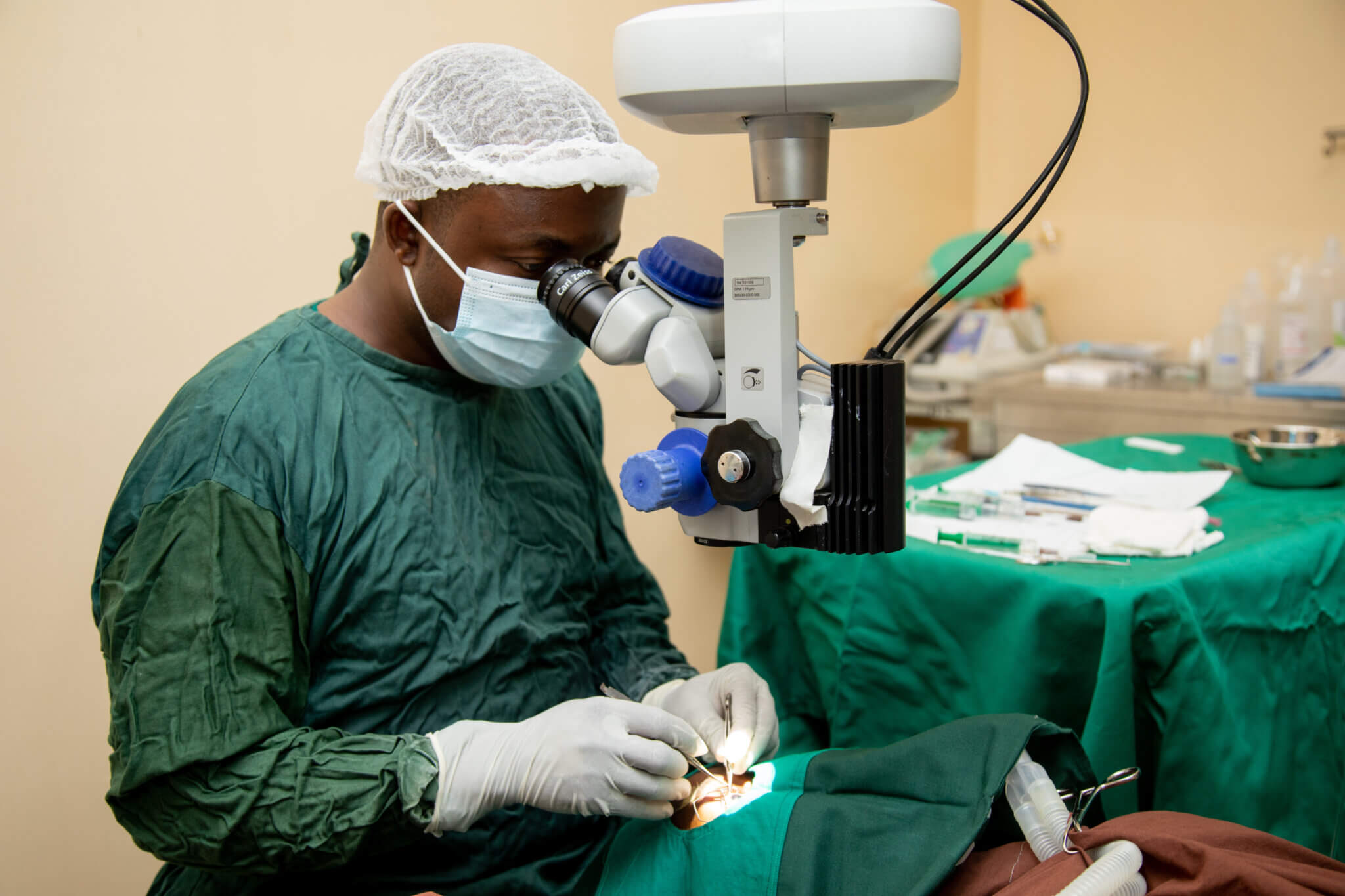
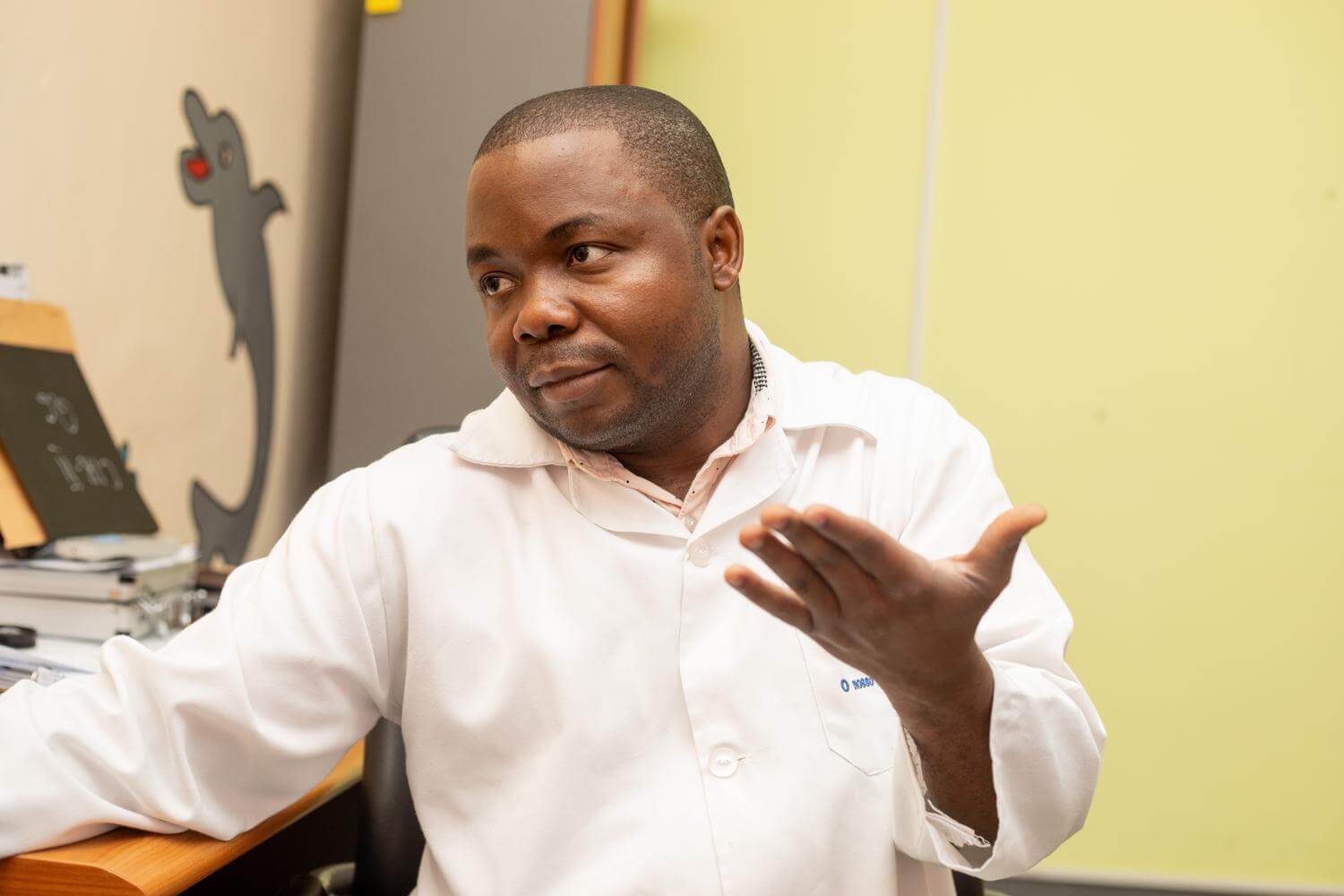
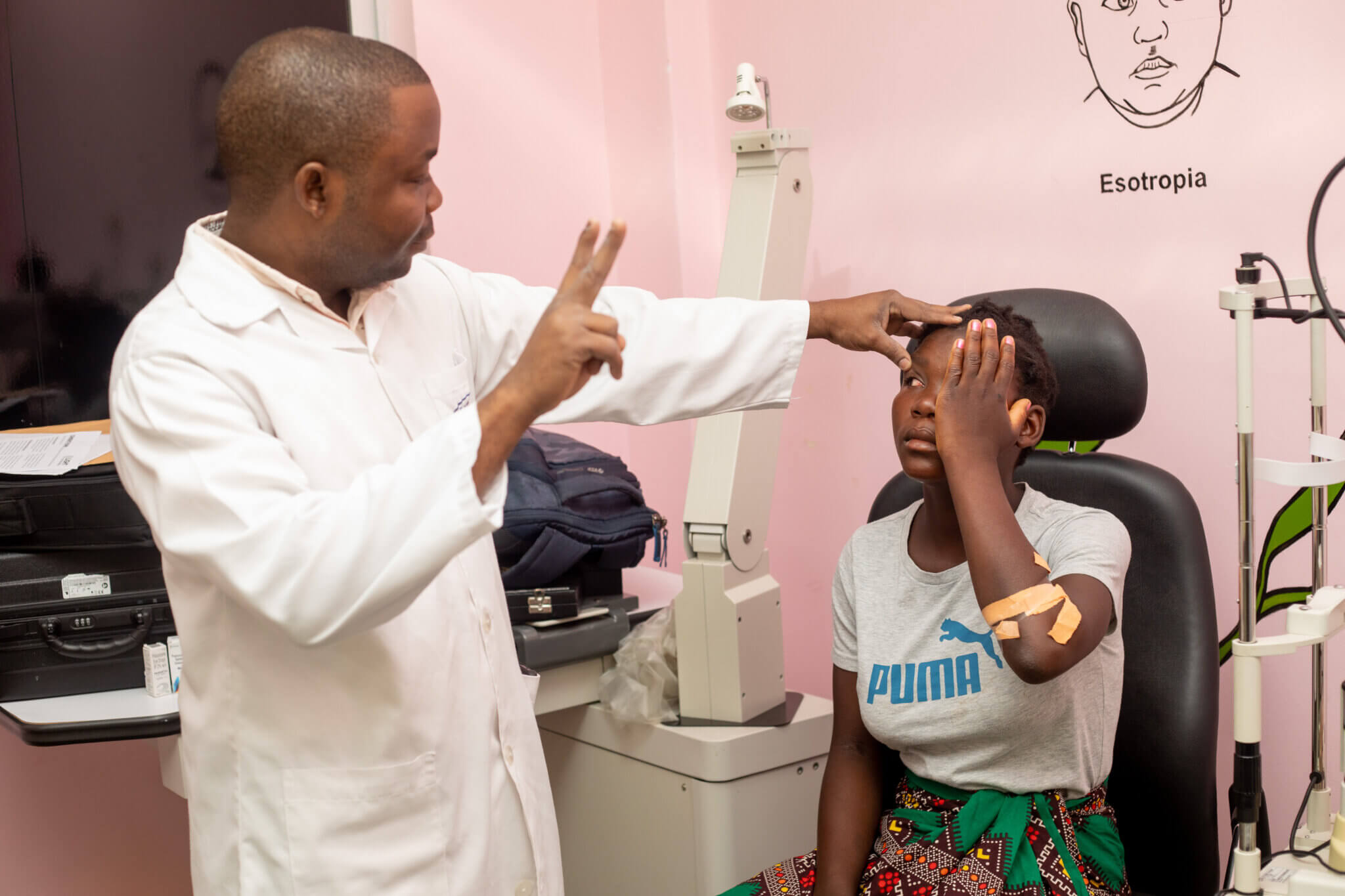
For a month spanning January and February of 2026, the University of Iowa Department of Ophthalmology welcomed a visiting colleague from across the globe: Dr. Isac Vasco da Gama, an ophthalmologist from Mozambique, for a month-long international observership. What unfolded over those four weeks was more than a clinical exchange—it was a vivid example of global partnership, shared purpose, and the power of education to transform patient care worldwide.
A Month of Immersive Learning
Dr. Vasco da Gama arrived in Iowa with clear goals: to deepen his expertise in cornea, cataract, glaucoma, pediatrics, contact lenses, and eye banking, and to explore how advanced systems of care could be adapted to Mozambique’s healthcare landscape. From the outset, his schedule was full and purposeful.
In cornea, he immersed himself in both clinical and surgical learning. He observed and practiced penetrating keratoplasty (PK) and gained exposure to advanced lamellar techniques including DMEK, DSAEK, and superficial keratectomy. He trained in the wet lab, practicing DMEK and committing to continued PK practice at least once a week. Beyond the operating room, he focused on the management of dry eye syndrome and corneal ulcers, assessment of keratoconus, crosslinking, and interpretation of corneal imaging.
A particularly meaningful component of his visit was time spent with the Iowa Lions Eye Bank. Working alongside residents and Greg Schmidt, Director of Research & Business Development at the Iowa Lions Eye Bank, he participated in cornea transplant wet labs, exploring both full- and partial-thickness techniques. He studied the details of tissue processing and the full scope of eye bank operations, while also examining what would be required to establish an eye bank in Mozambique—including developing standard operating procedures and identifying potential sponsors.
The conversations went beyond technique; they addressed sustainability and economic feasibility in his home country. As Greg Schmidt noted, building an eye bank requires far more than surgical expertise. “Some of the biggest challenges…include building a team of highly trained eye bank technicians” with specialized skills in tissue recovery, evaluation, and processing according to international standards. He emphasized that infrastructure and operations—from facility construction to specialized equipment and tissue storage—represent significant hurdles.
At the same time, Schmidt underscored the broader impact such an effort could have. A locally established eye bank could expand access to high-quality corneal tissue, reduce reliance on imports, and shorten transplant wait times. Just as importantly, it would create opportunities for culturally aligned donation practices and strengthen public awareness around eye donation—laying the groundwork for a more sustainable and equitable system of care.
Cataract, Glaucoma, and Beyond
In cataract surgery, Dr. Vasco da Gama observed phacoemulsification procedures and refined his understanding of phacodynamics and complication avoidance. Through discussions with faculty, including Dr. Tina Hendricks, he explored phacodynamic principles in greater depth. He also practiced in the eye simulator and wet lab, working on IOL calculations and surgical settings to optimize patient outcomes.
His exposure to glaucoma included observing MIGS procedures as well as trabeculectomy, combined phaco-trabeculectomy, goniotomy, and trabeculotomy. These experiences broadened his surgical repertoire and deepened his understanding of treatment options for complex cases.
In oculoplastics, he participated in clinic and didactic sessions with Drs. Erin Shriver and Chau Pham, while in pediatrics he observed refractive error management, orthoptic evaluation, and congenital cataract surgery. His time in contact lens clinics provided hands-on exposure to both hard and soft lenses, from patient assessment to lens preparation and fitting.
Education and Lasting Impact
Education was woven throughout his observership. He spent time with Dr. Tom Oetting at the VA, engaged in daily discussions and structured learning sessions, and delivered a lecture to medical students. During a lunch hosted by third-year medical student Brian Young, Dr. Vasco da Gama left a lasting impression—not just for his clinical expertise, but for his vision of systemic change.
“Lunch with Dr. Vasco da Gama was incredibly impactful,” Young reflected. “He came across as deeply humble, kind, and genuinely passionate about his work.” What resonated most was Dr. Vasco da Gama’s emphasis that global ophthalmology extends beyond individual patient care. As Young described, “He emphasized that global ophthalmology is not just about treating patients one by one, but about building sustainable, scalable models of care…creating a multiplier effect that allows care to reach entire rural communities efficiently.”
The conversation also highlighted the stark disparities in global eye health. A story shared by Dr. Vasco da Gama—of a child presenting with an advanced retinoblastoma—left a profound impression. “Cases like this were both striking and humbling,” Young said, underscoring the importance of early access to care and the responsibility future physicians carry in addressing these gaps.
Building Global Bridges
The observership extended beyond clinics and operating rooms. Dr. Vasco da Gama shared dinner with colleagues, spent time with public health students, and experienced a slice of Midwestern life—from adventures at an American mall to a lively evening of music bingo sponsored by Adam Stockman from the Iowa Lions Eye Bank.
In a touching reminder that global exchange is also deeply personal, he visited the admissions office with hopes that his child might one day apply to the University of Iowa. And in one memorable moment of Iowa winter initiation, colleagues helped him brave the cold—loading him up with as many cold-weather layers as they could find for him.
A Vision for Mozambique
Halfway through his visit, Dr. Vasco da Gama articulated not only what he had learned, but what he still hoped to master—and how he planned to achieve it. His strategy was clear: observing surgeries, engaging in structured discussions, dedicating time to wet lab practice, and continuing studying through articles and e-books.
Underlying every surgical observation and every classroom discussion was a larger mission: to expand access to advanced ophthalmic care in Mozambique. The knowledge gained about corneal transplantation, eye banking infrastructure, imaging interpretation, and surgical technique holds the potential to reshape care delivery for patients thousands of miles away.
The Power of Partnership
Dr. Isac Vasco da Gama’s month in Iowa was a testament to what academic medicine can accomplish when it embraces global collaboration. Through mentorship, shared expertise, and genuine hospitality, the University of Iowa Department of Ophthalmology not only enriched one physician’s professional journey—it strengthened the foundation for improved eye care in Mozambique.
In the end, the observership was not simply about learning new procedures. It was about building systems, fostering friendships, and advancing a shared commitment: restoring sight and transforming lives, wherever patients call home.