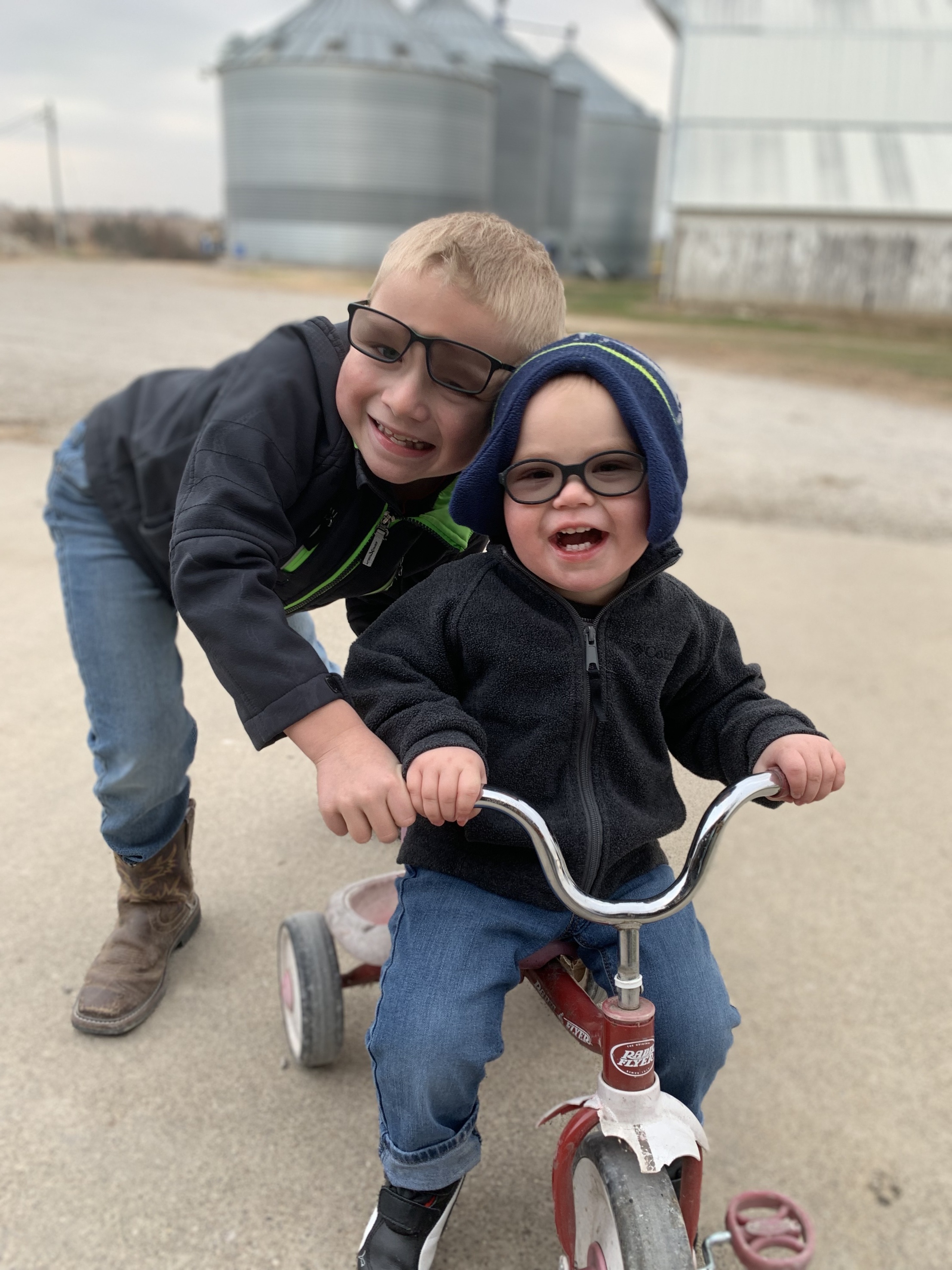
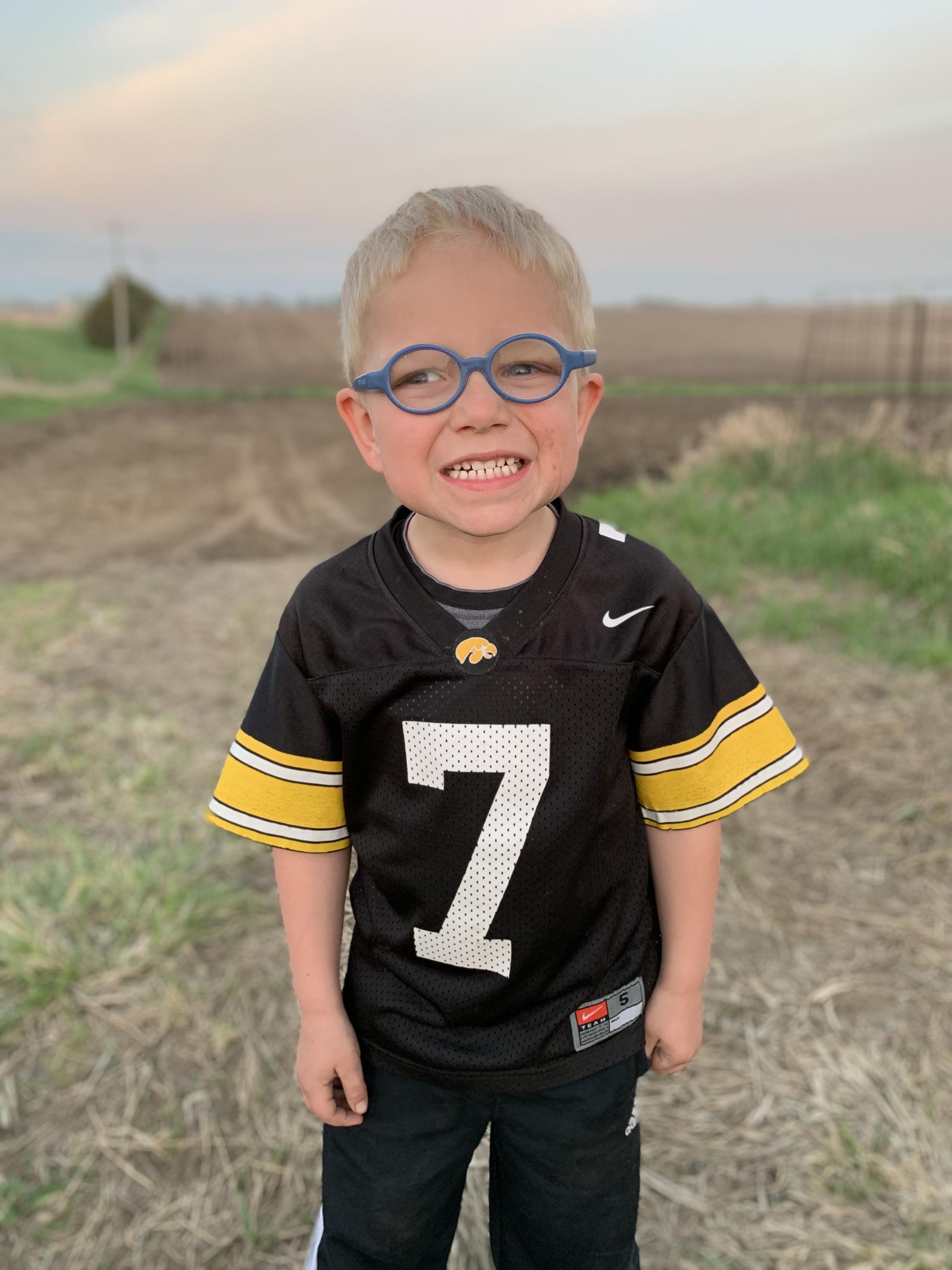
When Amanda Drost’s oldest son, Richard, was just 15 months old, she didn’t have any reason to suspect something might be wrong with his vision. Like most toddlers, he stumbled occasionally and explored the world with curiosity and energy.
But during a routine visit to his daycare in Pella, Iowa, members of the local Lions Club conducted vision screenings through the Iowa KidSight program, a statewide initiative led by the Iowa Lions Clubs and the University of Iowa Department of Ophthalmology that provides free vision screening for young children.
Richard didn’t pass and a few weeks later, Drost received a letter recommending a follow-up eye exam. “At first we thought, Oh, I’m sure all the parents got the same letter,” Drost recalled. “So we kind of brushed it off.”
But after a couple of months, another letter arrived—this one from Iowa KidSight asking whether financial barriers had prevented the family from scheduling an eye exam. The letter also included an important statistic: only about 3–4% of children screened through KidSight are referred for follow-up care.
That’s when Drost realized the screening result might be more significant than she initially thought. “So, that’s when we made the appointment.”
A Life-Changing Pair of Glasses
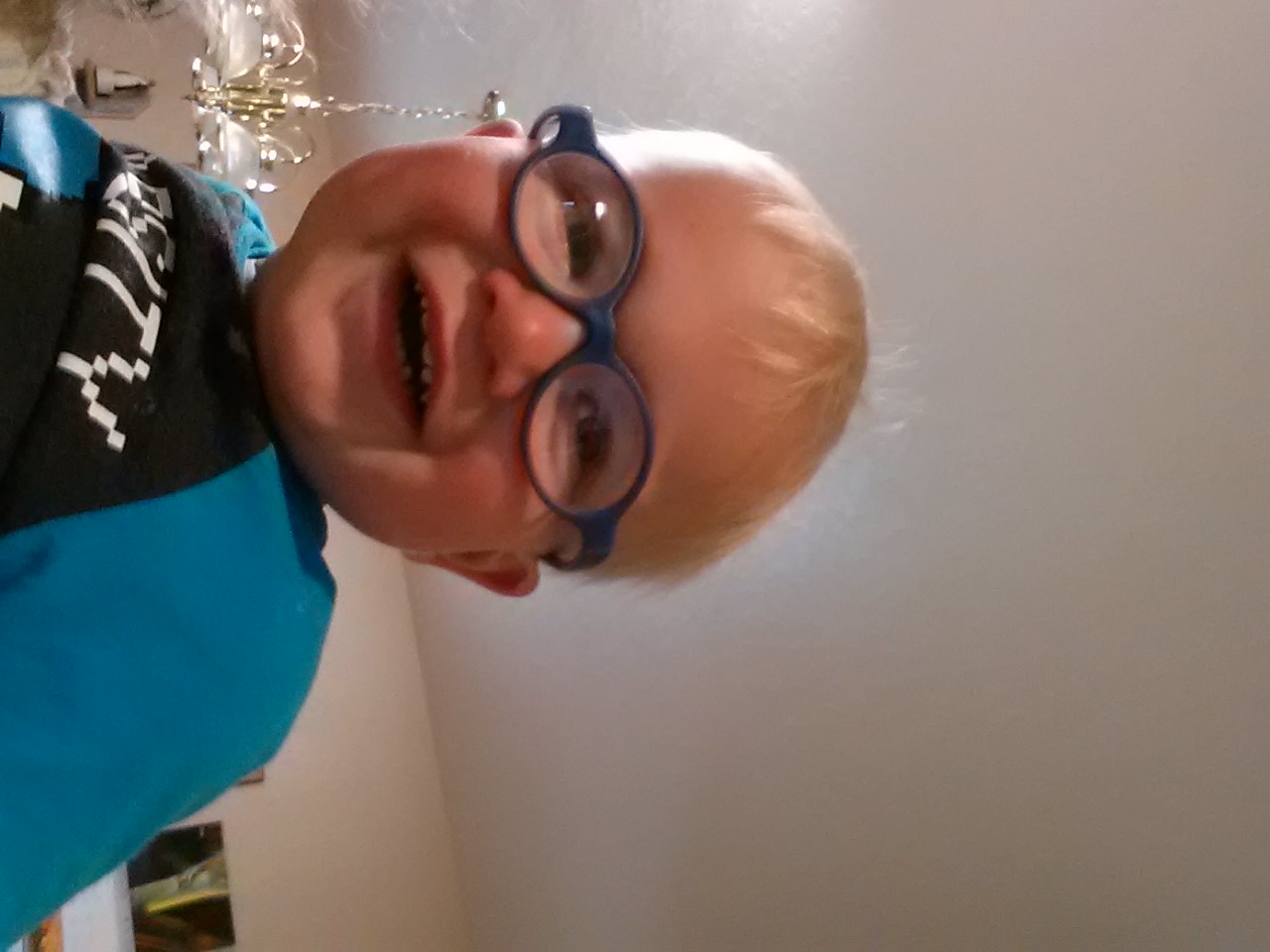
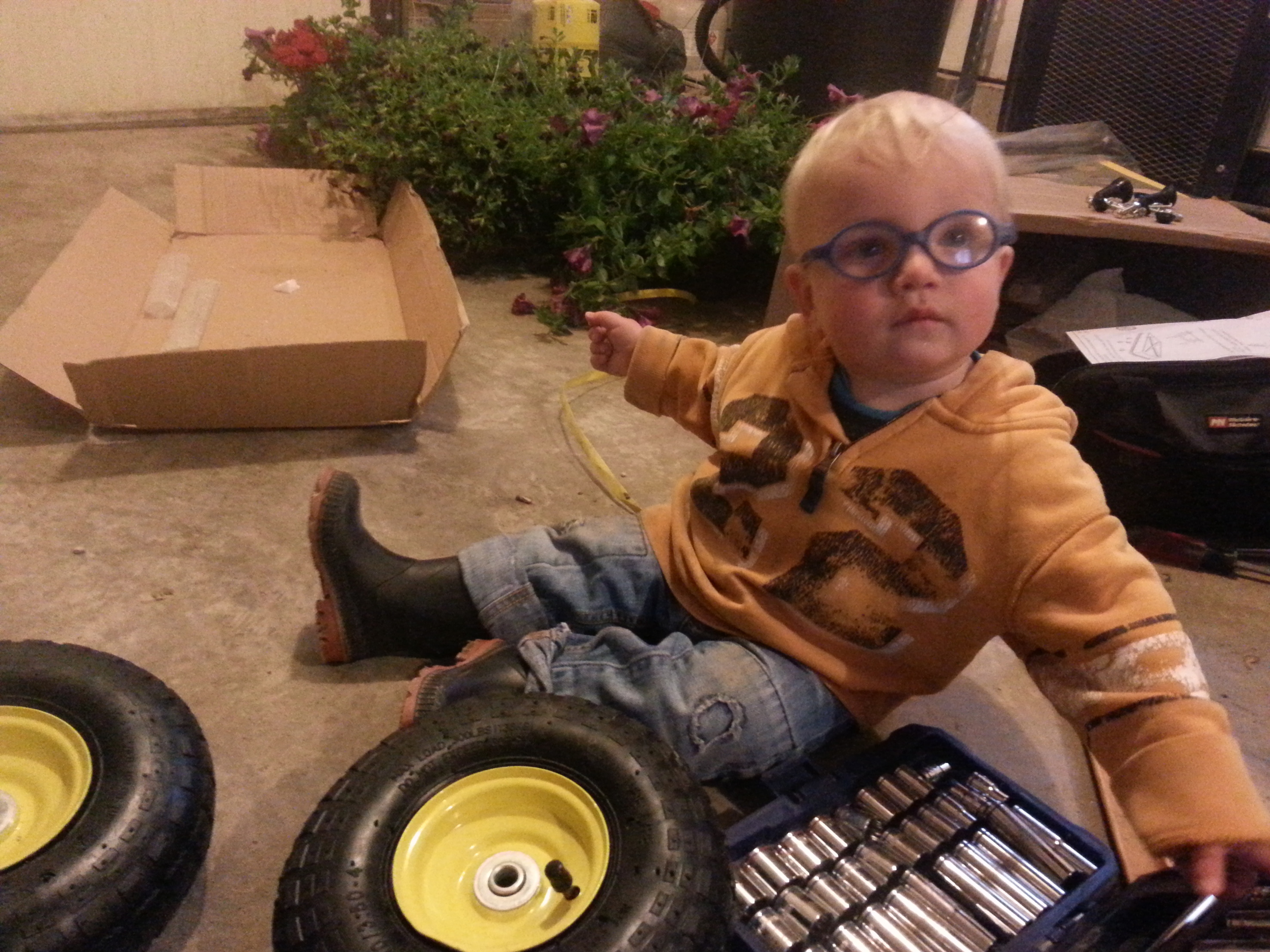
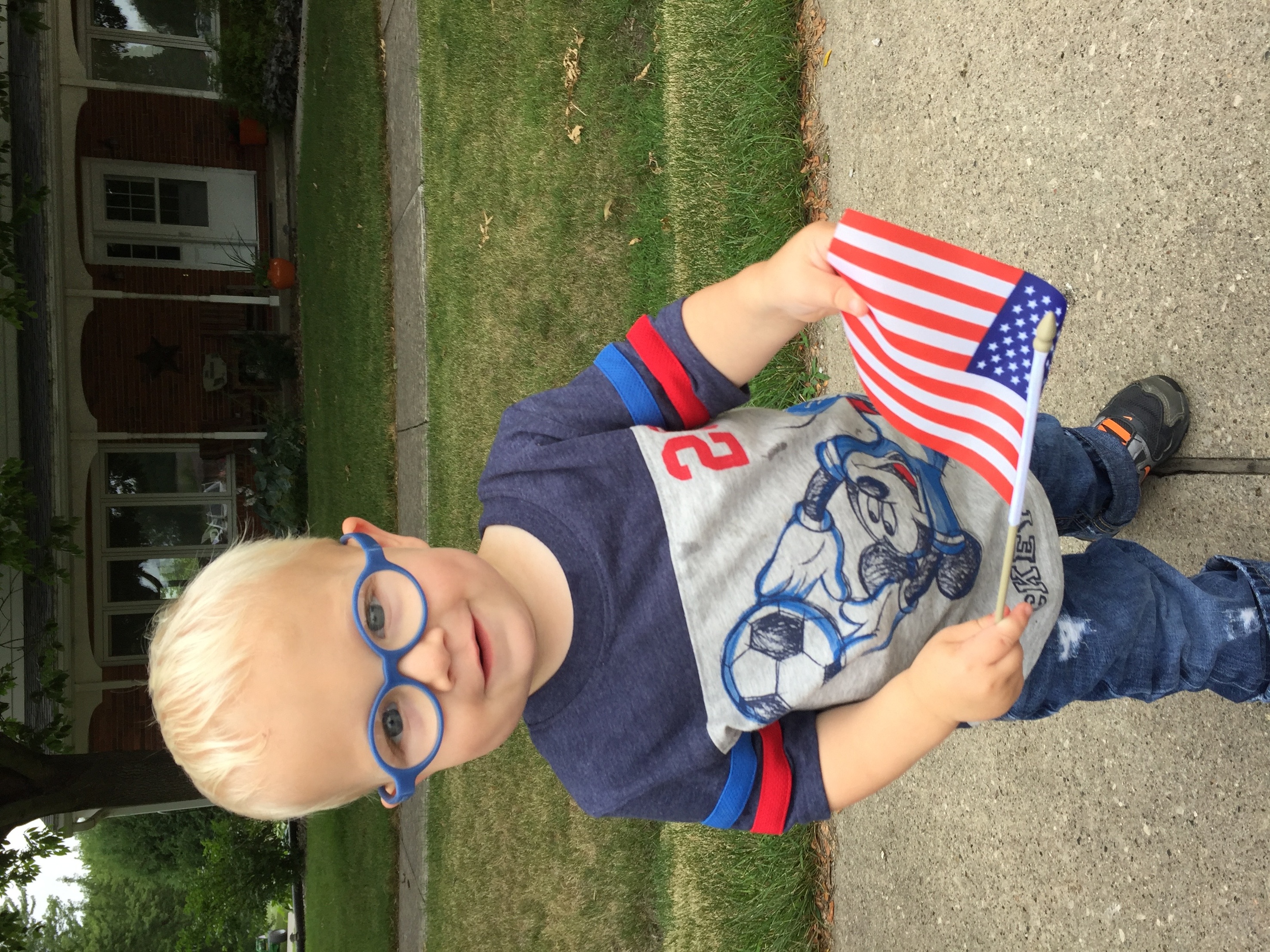
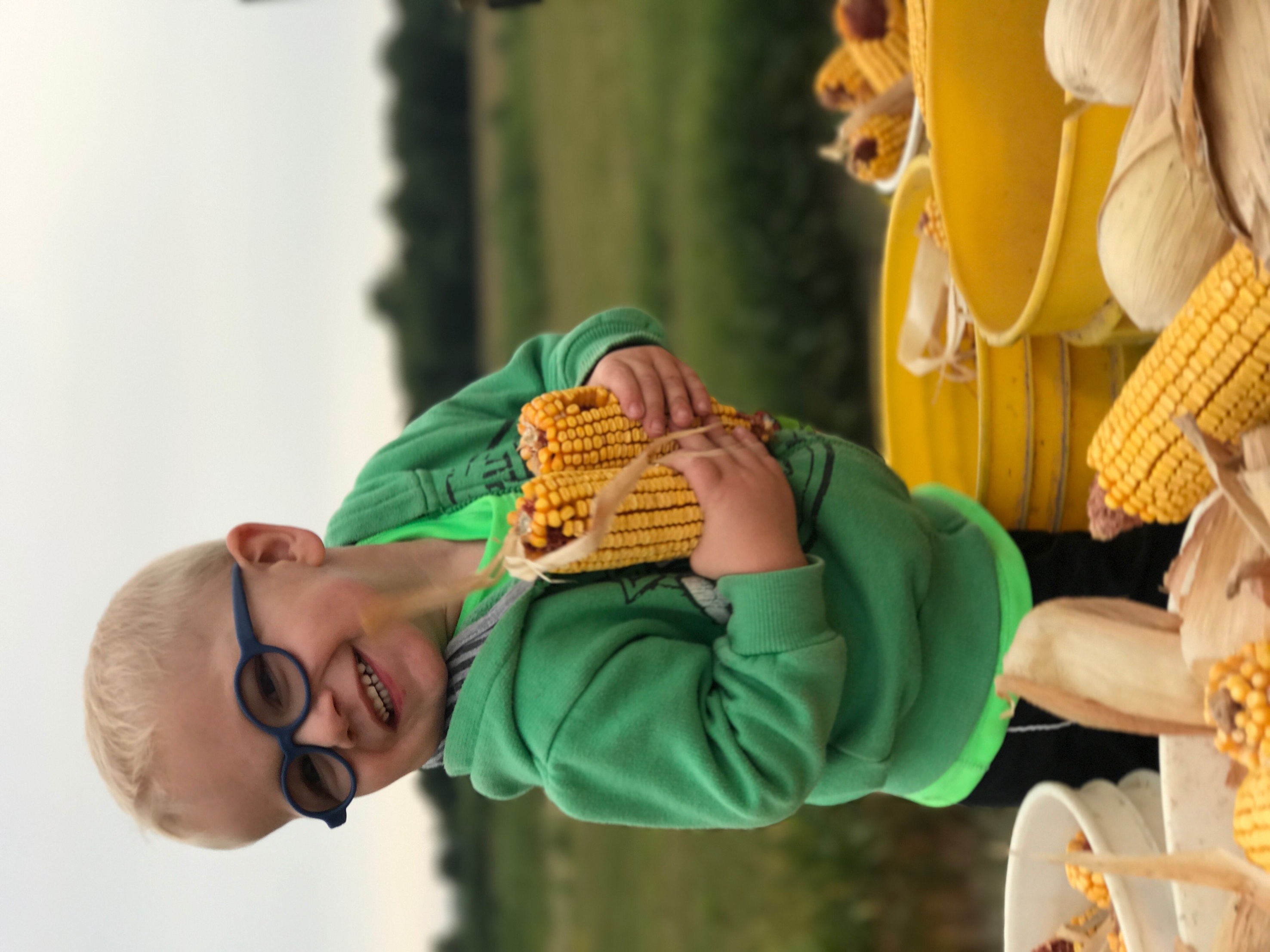
When Richard was 20 months old, he received his first pair of glasses. Drost remembers the moment vividly. Her husband was assembling a small John Deere wagon in the garage along with Richard. When Richard put on his glasses for the first time, something changed instantly.
“He had the biggest smile on his face,” Drost said. “He didn’t fight the glasses at all. He just started helping his dad put the wagon together. It was like, I’m a different kid.” Until that moment, Drost said, she hadn’t realized how blurry the world had been for her son. “People often ask us how we knew our kids needed glasses,” she said. “You really don’t know until they have them. Then you see the difference.”
Early vision problems are common and often difficult for parents to detect. Young children don't know they may have vision issues because they’ve never experienced the world in any other way. That’s why programs like Iowa KidSight focus on screening children between six months and preschool age, before vision problems can affect learning and development.
For the Drost family, the impact of that early screening would reach even further.
Watching for the Signs
Years later, when Drost’s younger son Andy was born, the family was already paying closer attention to eye health. Because Richard had needed glasses at such a young age, their local eye doctor recommended that Andy be examined during infancy.
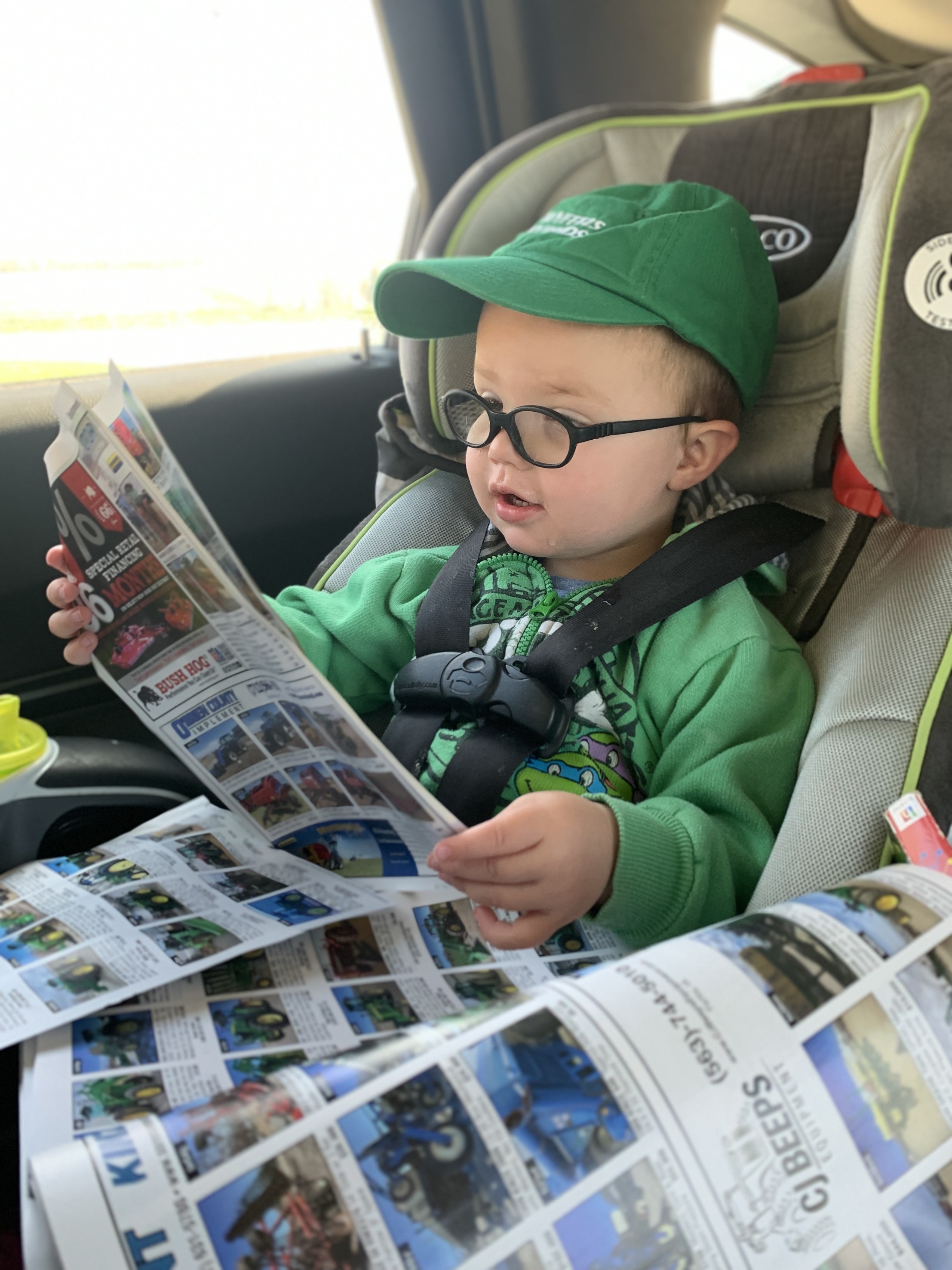
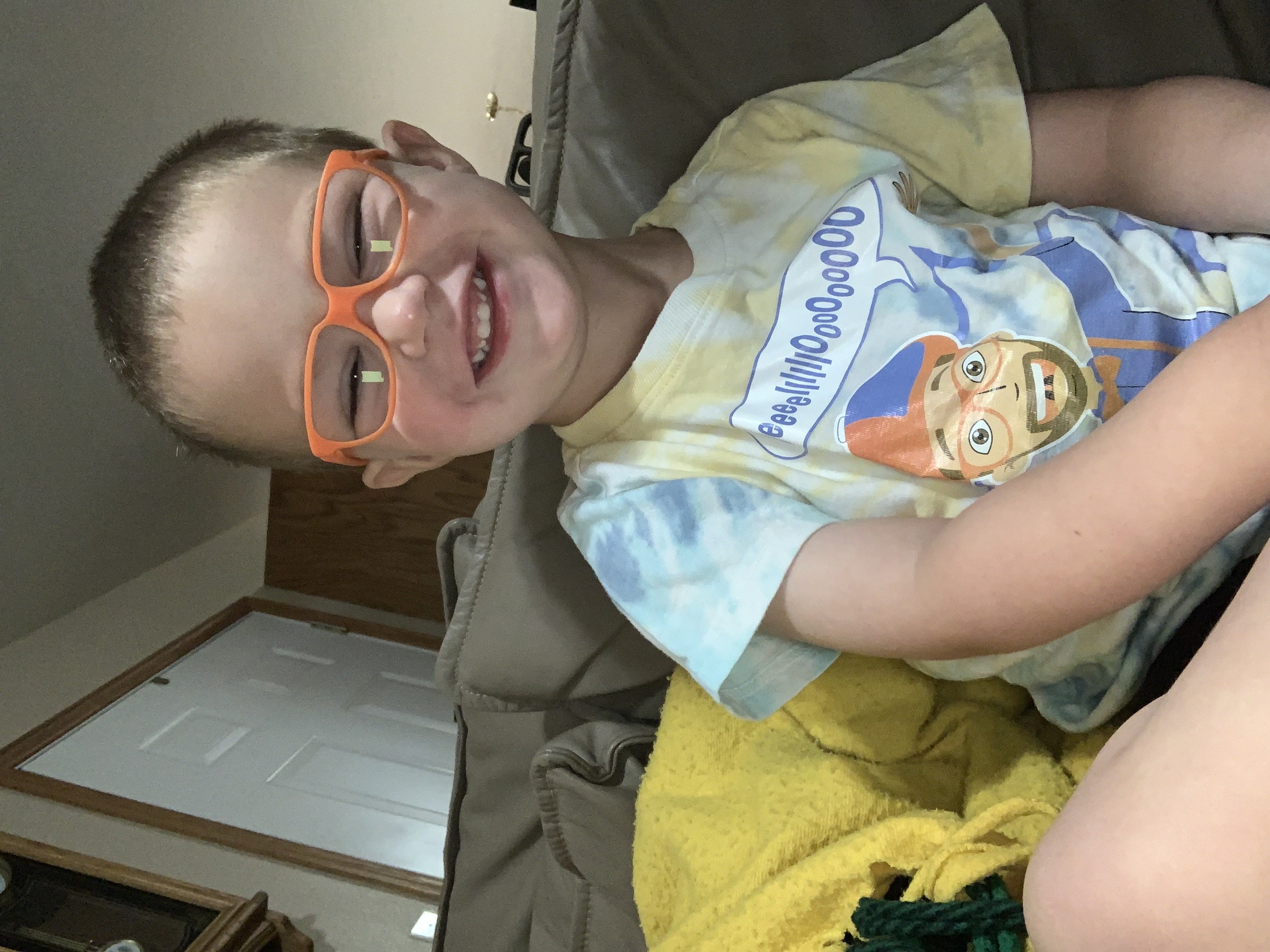
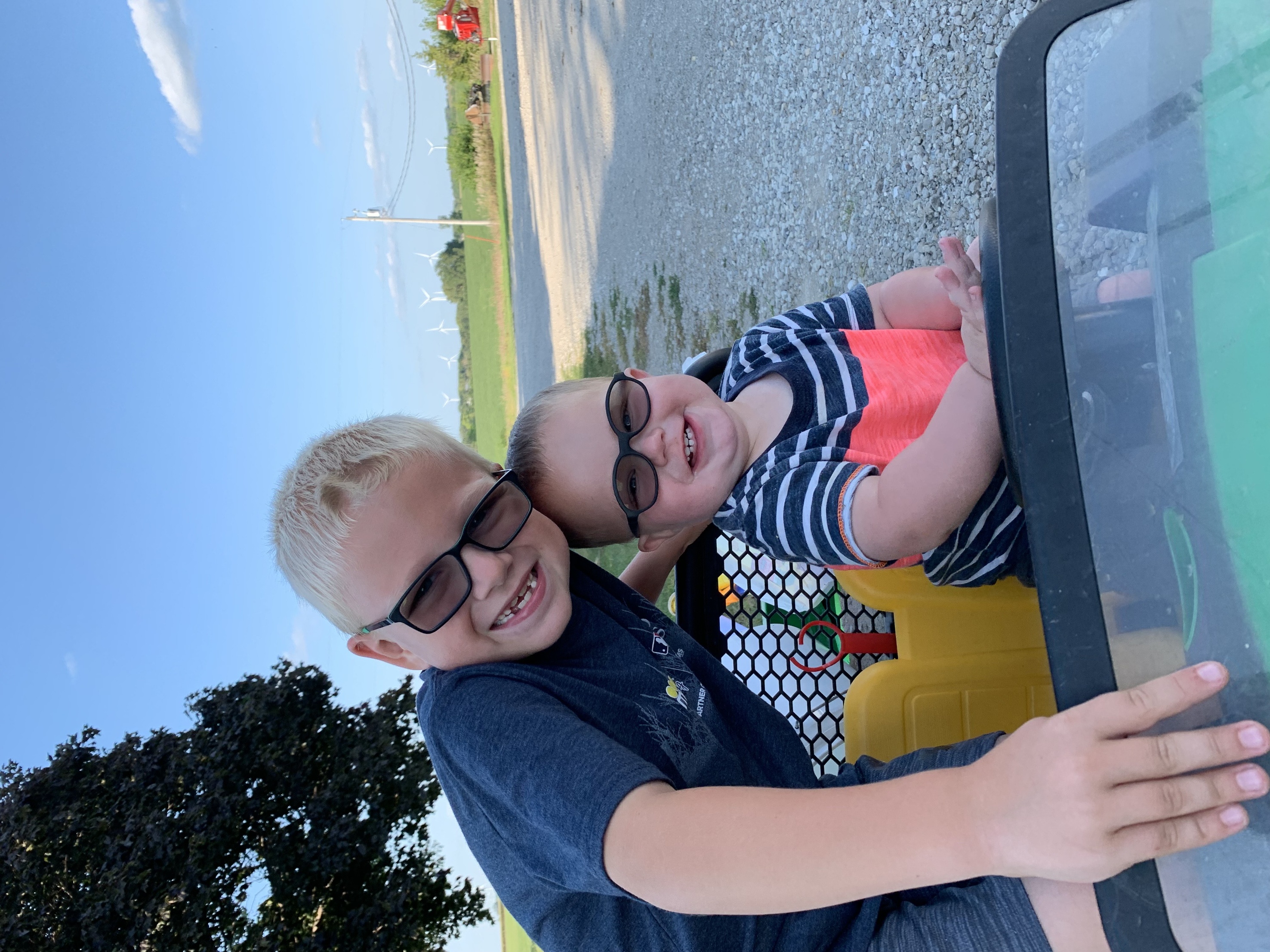
Sure enough, Andy showed similar vision issues. He received his first pair of glasses at 14 months old.
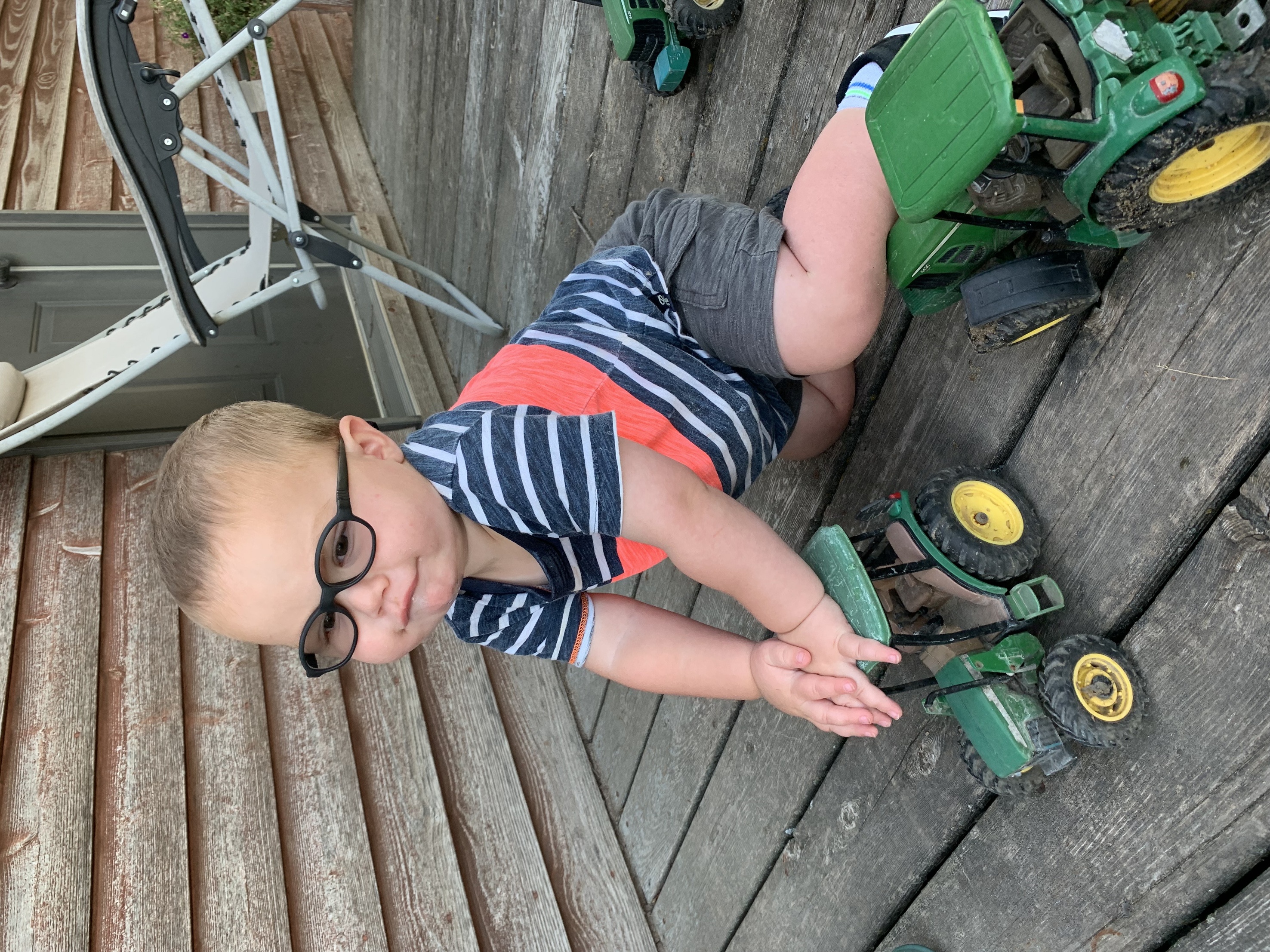
Again, Drost saw the transformation immediately. “That night he was playing tractors on our deck with a smile on his face,” she said. “He was just more engaged in what he was seeing.” Before getting his glasses, Andy had often wanted to be held, but with clearer vision he became more curious, independent and wanted to explore his new world.
One memory still stands out for Drost. The family had a garden with cherry tomato plants. While Drost and Richard were picking ripe red tomatoes, she suddenly realized Andy had wandered off.
She looked down and found him sitting near the bottom of the plant. “He was picking the green tomatoes,” she said, laughing. “He was just really into what he was doing. He’d just never been able to see them clearly before.”
A Visit to Iowa
When Andy was almost three, Drost noticed something new: sometimes he squinted or crossed one eye, especially when he was tired or when his glasses were off.
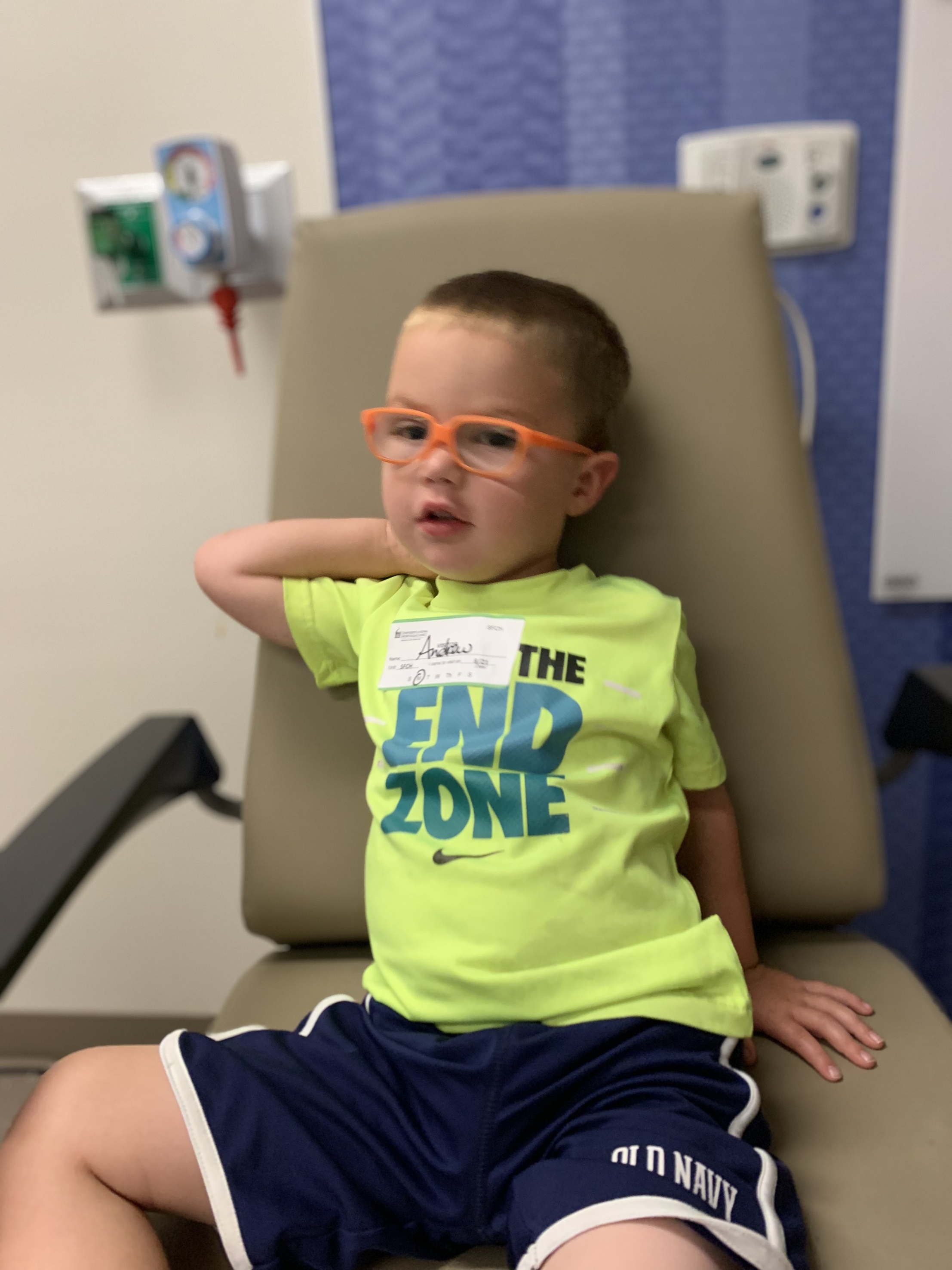
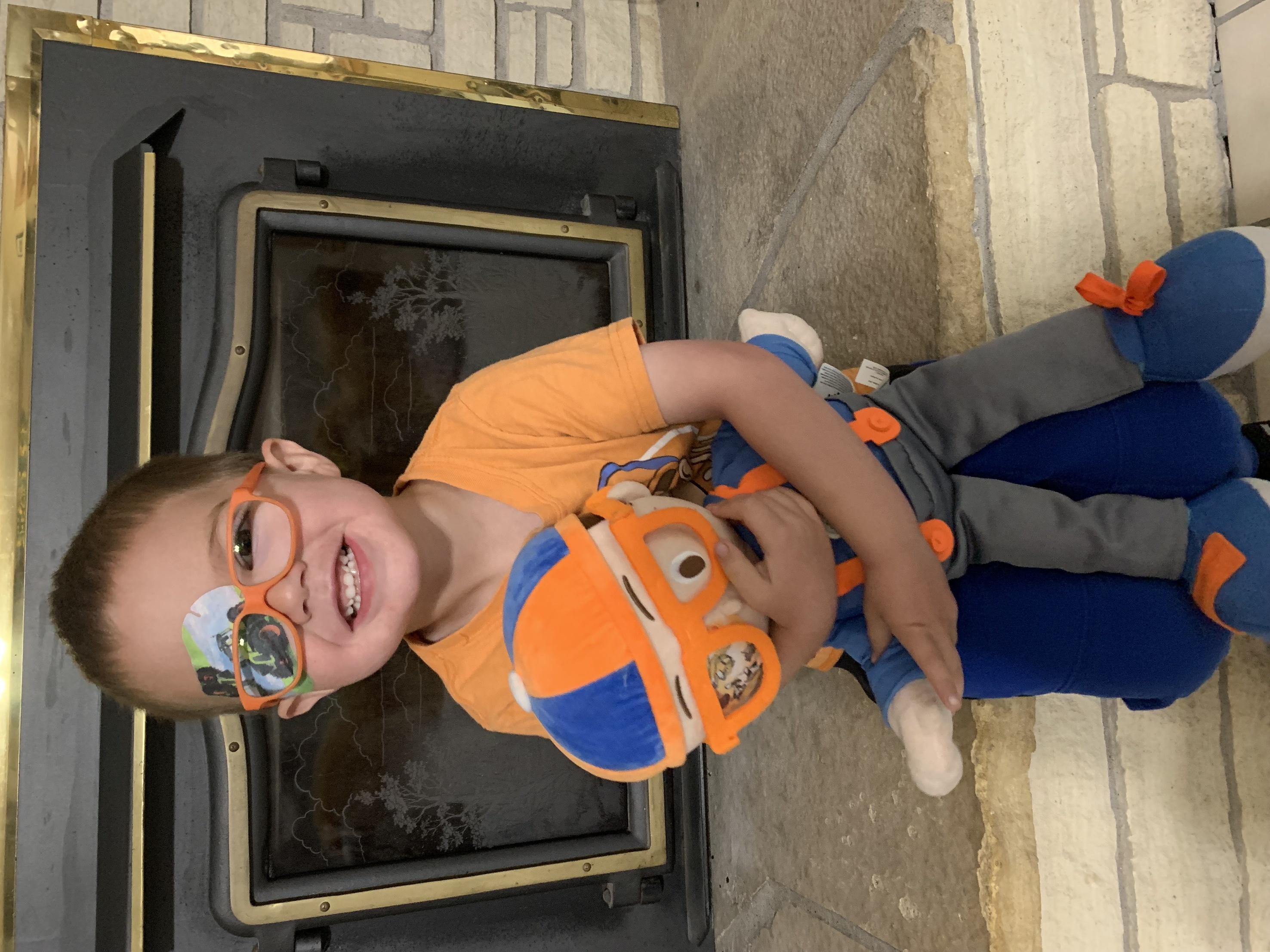
The family sought care at University of Iowa Health Care’s Department of Ophthalmology, where specialists determined that Andy’s prescription needed to be significantly stronger than previously thought. He also began treatment for strabismic amblyopia, commonly called “lazy eye,” which included wearing an eye patch for several hours each day to strengthen his weaker eye.
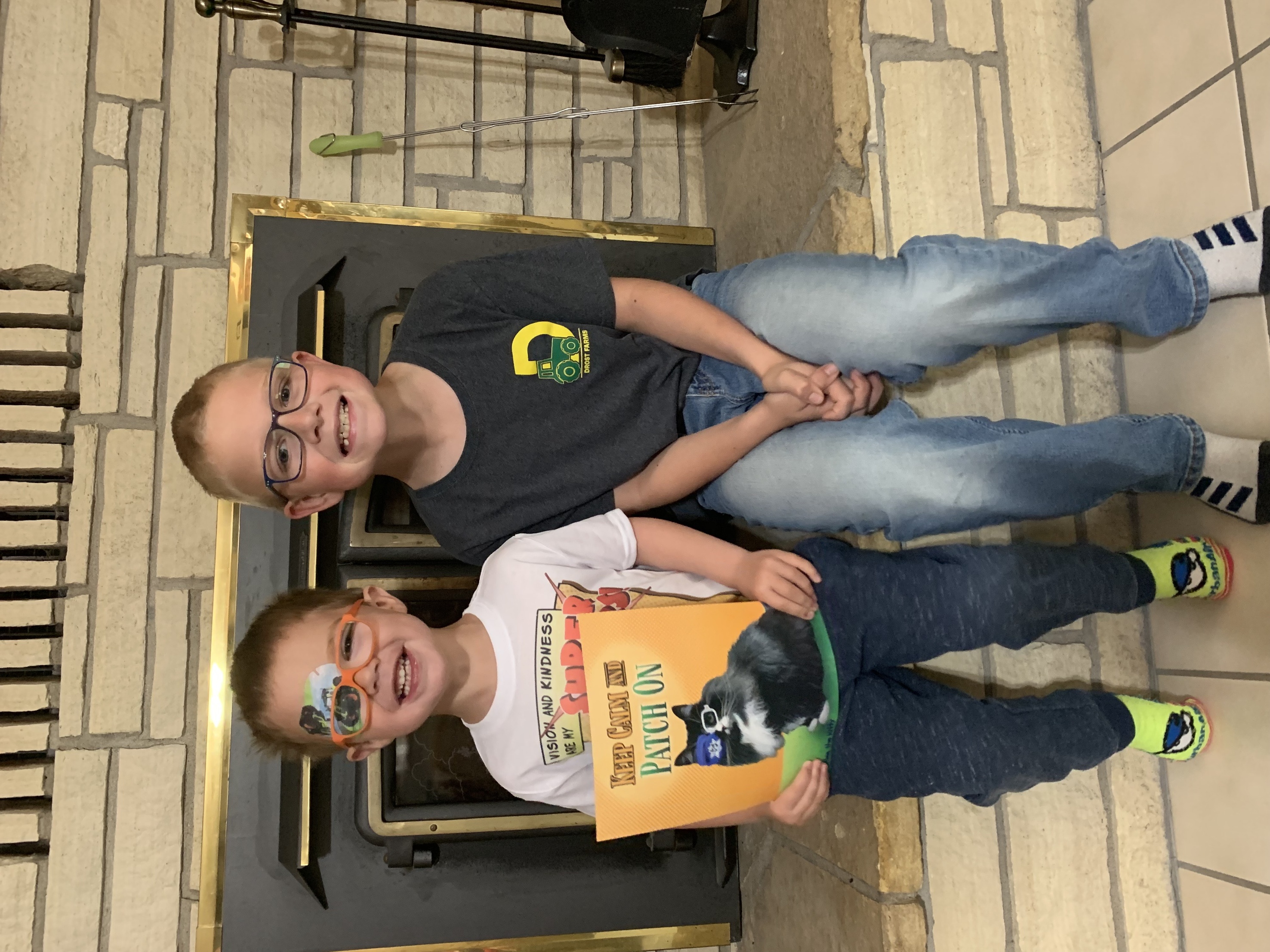
Now five and a half, Andy wears his eye patch about three hours a day, often during school. “He’s really good at explaining it,” Drost said. “If someone asks why he’s wearing it, he says, ‘It makes my eyes stronger.’” His classmates have embraced the routine as well. “The kids in his class are so good with it,” Drost said. “They’re used to him wearing it.”
Teachers even help explain the patch to new classmates by reading a children’s book featuring a character who wears one.
At first, Andy struggled to see with only one eye. Now he runs, plays outside, and even participates in gym class while wearing the patch. “He does recess and everything with it,” Drost said. “He can pretty much do whatever he wants with that one eye now.”
The Importance of Early Screening
Stories like the Drost family’s illustrate why early vision screening is so critical.
Vision problems such as amblyopia, refractive errors, or eye misalignment often develop during early childhood. If detected early, treatment can be highly effective. But if they go unnoticed, they may lead to long-term vision loss or learning challenges.
Through partnerships with Lions Clubs, preschools, childcare centers, and volunteers across Iowa, Iowa KidSight provides free screenings for thousands of children every year. The screenings take only a few minutes and require no eye drops or verbal responses—making them especially effective for very young children.
For Drost, the program made a lasting difference for her family. Without that screening at Richard’s daycare, she might not have realized anything was wrong. “Especially with toddlers, they’re always falling and clumsy anyway,” she said. “You wouldn’t necessarily know.”
Instead, both of her sons received early care—and a clearer view of the world.